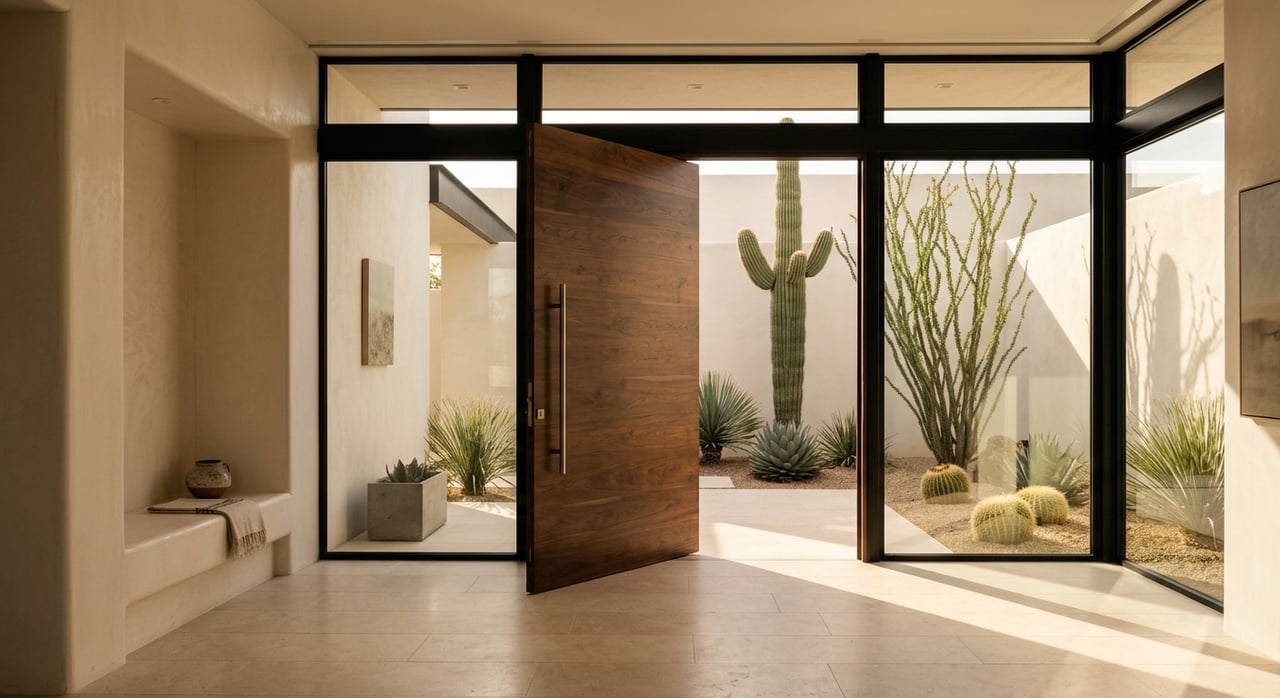
Relocating to Paradise Valley With a Smarter Buyer Plan
June 11, 2026
June 11, 2026
Thinking about moving to Paradise Valley? It is one of those markets where the home itself is only part of the story. If you are relocating from another metro, you need to understand lot size, zoning, permit history, and market pace just as much as finishes and photos. This playbook will help you research smarter, tour with purpose, and buy with more confidence. Let’s dive in.
Paradise Valley is a small incorporated town in Maricopa County with a 2025 estimated population of 12,774 and 15.4 square miles of land. The town is known for a predominantly single-family housing pattern, along with resorts, golf courses, schools, medical centers, and places of worship. Its history and planning approach center on preserving a quiet, residential, country-like setting with minimal government intervention.
For you as a buyer, that character shows up in practical ways. Most of the town is zoned R-43, which means a one-acre minimum lot size, though other zones also exist. In plain terms, Paradise Valley is structurally low-density, so privacy, lot utility, exterior orientation, and future remodel potential can matter just as much as the kitchen or primary suite.
Paradise Valley is a high-value market, but it is not necessarily a fast-moving one. Redfin’s April 2026 data shows a median sale price of $4.62 million, a median of 69 days on market, and a median sale price per square foot of $885. The same snapshot describes the market as not very competitive.
That slower rhythm matters if you are relocating on a deadline. Redfin also reports a 95.5% sale-to-list ratio, only 4.0% of homes selling above list price, and 43.4% of homes showing price drops. That suggests many buyers still have room to evaluate, negotiate, and focus on fit instead of rushing into the first available option.
You may also see a different number from Zillow. Its Home Value Index shows a typical home value of $3.50 million as of April 30, 2026, with 12.9% year-over-year growth. That is not a contradiction, because Zillow’s figure is an index and Redfin’s number reflects closed-sale data.
Redfin’s migration data shows Paradise Valley attracts interest from outside the metro, with Chicago, Seattle, and Los Angeles among the leading origin markets in its latest snapshot. If you are moving from out of town, that pattern should feel familiar. You are likely trying to compare neighborhoods, narrow options online, and make the most of a short visit.
In Paradise Valley, remote research is especially important because the homes are often custom, the lots are large, and the rules can be more restrictive than in other communities. A beautiful listing can still have limitations that affect how you live there later. That is why your early homework should focus on the property, the parcel, and the surrounding context.
Before you book flights or stack showings, research the land itself. The Maricopa County Assessor lets you look up a property by address or parcel number, and the Recorder’s Office can help you locate deeds, plats, CC&Rs, liens, and other recorded documents. The Recorder also notes that lot dimensions and boundaries may be found through Assessor pages or subdivision plats.
This step is easy to skip when a home looks polished online. In Paradise Valley, that can be a mistake. Because the town’s land-use pattern is low-density and lot-driven, you want to know what you are really buying beyond the square footage inside the home.
Here are a few smart questions to ask early:
The Arizona Department of Real Estate advises buyers to visit the location, check nearby zoning maps, review future freeway or road-widening plans, confirm the school district, and read CC&Rs before signing. In Paradise Valley, that guidance carries extra weight because the town states that its building and zoning rules can be more restrictive than in other communities and that all construction-related work requires a town permit.
That means your questions should go beyond whether you like the house today. You also want to know whether the property supports what you may want tomorrow. If you are considering a guest house update, a major remodel, expanded outdoor living, or other changes, those ideas should be evaluated against zoning, permits, and recorded restrictions early in the process.
If you are looking at new construction, a lot, or a subdivision home, ADRE says the Public Report must be provided before a purchase contract is signed. That report can include details on flooding and drainage, adjacent land uses, utility providers, community facilities, taxes, assessments, and HOA information.
For a relocation buyer, that document can save time and reduce surprises. It gives you a more complete picture of how the property functions beyond marketing language. In a market where many buyers are managing the search from a distance, that clarity is valuable.
In Paradise Valley, more showings do not always mean a better tour. Because the town is low-density and many homes are custom, a short, well-screened list usually works better than a marathon day. You want to compare properties based on how they fit your goals, not just how many you can see.
A focused tour should include a few key filters:
This is where local guidance can make a real difference. A polished home can still have issues that affect long-term value or usability. Looking at the lot, the surrounding context, and the town rules together helps you evaluate the whole property, not just the presentation.
ADRE’s buyer checklist recommends reading the seller disclosure and purchase contract carefully, considering a termite inspection, using a professional home inspector, and confirming that appliances, water, and irrigation work properly. Those are the essentials, and they matter in any market. In Paradise Valley, they should also be paired with permit verification and title review.
That is especially important in a custom-home market. A remodel may look seamless, but you still want to confirm the work history and documentation. The goal is not to create friction. It is to reduce avoidable risk before you close.
In Maricopa County, property transfer documents such as deeds are recorded through the Recorder’s Office. The county also notes that searching recorded documents on your own is not a guarantee that a property is free and clear of liens, which is one reason buyers often use a title company for a formal title search.
Property taxes follow a separate county process. The Maricopa County Assessor determines property values and classifications, and the Treasurer mails property tax statements in September. If you disagree with a valuation, the county says appeal deadlines are time-sensitive, so it is worth reviewing those details soon after closing.
If you plan to use the property as a second home or you will own it remotely, Maricopa Title Alert is a useful local safeguard. The Recorder’s Office says it can send email or text notices when a document is recorded under a monitored name. For high-value or part-time occupied properties, that extra layer of awareness can be helpful.
Relocation buyers often assume the biggest challenge is finding inventory. In Paradise Valley, the bigger challenge is reading each opportunity correctly. You are balancing market timing, lot value, zoning, permits, title, disclosures, and future usability in a market that is limited by design but not always highly competitive.
ADRE also notes that the seller’s broker does not represent the buyer. That matters if you are moving quickly from another city and relying on local interpretation. The right advisor helps you sequence the process, narrow options efficiently, spot constraints earlier, and negotiate with better context.
For buyers who care about both lifestyle and long-term value, design awareness matters too. A home may photograph beautifully, but what you need is honest guidance on layout, condition, livability, and how the property will function over time. That is where a strategic, local perspective can save you money, time, and second-guessing.
If you are planning a move to Paradise Valley, a thoughtful plan beats a rushed one every time. The best outcomes usually come from doing the remote homework first, touring with a clear framework, and verifying the details that do not show up in listing photos. When you approach the process that way, you give yourself a much better chance of finding a home that fits both your life and your investment goals.
If you want a calm, strategic partner for your Paradise Valley move, Josh Gonzalez can help you evaluate opportunities, avoid costly surprises, and navigate the process with confidence.
Stay up to date on the latest real estate trends.


Find Your Dream Home
Whether you’re buying, selling, or simply exploring your options, I’m here to listen, strategize, and deliver. Let’s connect to discuss your goals and see how my approach can help you move forward with clarity and confidence.