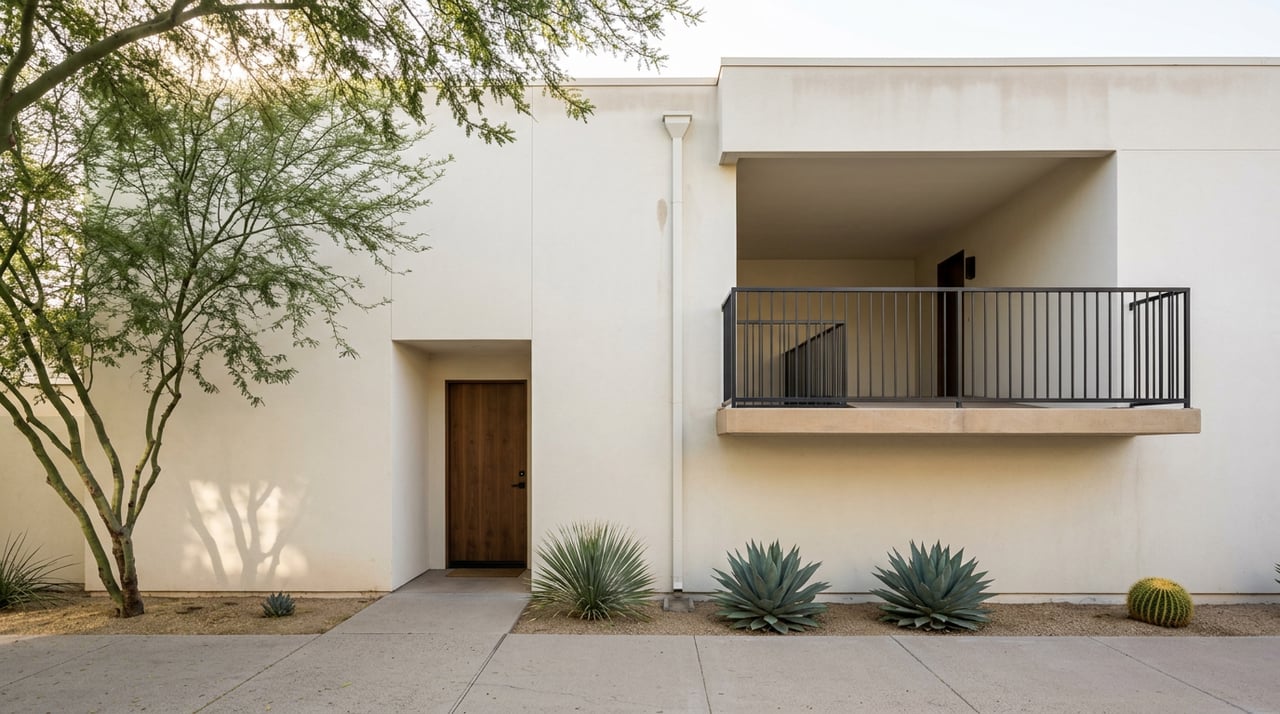
Biltmore Condo HOA Disclosure Questions Buyers Should Ask
August 20, 2026
August 20, 2026
Picture two condos in Biltmore, a few hundred feet apart. Same decade of construction, same square footage, same view toward the golf course. One sits inside an association that has been quietly funding its roof and paving reserves at the level its reserve study recommends for fifteen straight years. The other has kept dues low by deferring those contributions, counting on a future special assessment to cover the gap when the time comes.
Right now, a buyer comparing those two units has almost no way to tell them apart before writing an offer. Starting September 12, that changes. Arizona's new resale disclosure law does not touch what either association actually owes for its next roof or repaving job. It just makes the difference between those two buildings impossible to miss.
What the state has always required is disclosure: as the Arizona Senate's 2026 HB 2397 fact sheet explains, when a unit changes hands, the seller's association has to hand over a packet that includes the total dollar amount sitting in reserves. That single number has been public for years. What buyers haven't reliably seen is the context around it: whether the board is actually contributing to that account on schedule, what repairs the board has been discussing behind closed doors, or whether the last financial report was ever independently reviewed.
A total reserve balance without that context is close to useless. An association holding $400,000 in reserves could be exactly on pace for a $420,000 roof replacement next year, or it could be badly behind on a $1.2 million repaving and elevator project the board has known about for two years. The old packet showed the number. It did not show the story behind the number.
Governor Hobbs signed House Bill 2397 in June, and it takes effect September 12, 2026, along with a companion bill that raises the foreclosure threshold for delinquent condo assessments to match planned communities: 18 months behind or $10,000 owed, whichever comes first. Together they shift real leverage toward the buyer's side of a Biltmore condo transaction.
The resale packet itself gets substantially fuller. Along with the documents associations already had to provide, sellers and their HOAs now have to include:
The law also raises the bar for what counts as a disclosure failure, requiring knowing or reckless conduct rather than a simple mistake, and it gives both buyers and sellers a formal damages remedy, including recovery of attorney fees, if the required information is not delivered.
None of this forces a board to fund reserves properly. It just means a board that hasn't been funding reserves properly no longer gets to keep that quiet.
This law would matter in any market. It matters more in one where buyers finally have room to read the paperwork instead of racing past it. Tina Tamboer, senior housing analyst with the Cromford Report, described the Valley's demand and supply index opening 2026 near 80, a level that sits well into buyer's-market territory on a scale where 100 is balanced.
In that interview with AZ Big Media, she said:
"When we say it's a buyer's market, I don't want people to freak out. It's not the kind of buyer's market we saw in 2008. This is a market where buyers can actually negotiate again."
Condos have felt that shift more than single-family homes, since buyers weighing an attached unit against a comparable-priced house with more space have been choosing the house. That gives a Biltmore condo buyer both the incentive and the time to actually open a reserve study this fall instead of skimming past it under contract-deadline pressure. A packet that used to arrive as a formality now arrives as something a patient buyer, or a buyer's agent doing the job right, is likely to read line by line.
Most Valley condo buyers deal with a single HOA. A Biltmore condo buyer is usually dealing with two layers: a master association covering the wider corridor and a separate sub-association governing the specific gated community the unit sits inside. Biltmore Courts, Biltmore Gates, Biltmore Hillside Villas, Biltmore Estates Circle, Two Biltmore Estates, and Biltmore Square all operate as distinct associations with their own boards, their own budgets, and their own reserve history, even though a buyer touring three of them in one afternoon might barely notice the property line between them.
Monthly dues across these associations vary about as widely as the amenities they cover:
| Sub-association | Typical monthly dues | What that generally covers |
|---|---|---|
| Biltmore Estates Circle | roughly $400 to $650 | Common area upkeep, architectural guidelines for custom homes |
| Biltmore Greens, Shores, and Square | roughly $300 to $700 | Exterior, landscaping, shared amenities |
| Biltmore Gates | roughly $700 to $850 | Front yard and street maintenance for the community's single-family product |
| Biltmore Courts | roughly $480 to $750 | Guard gate, pool and spa, exterior maintenance |
| Biltmore Hillside Villas | roughly $850 to $1,400 | Exterior, landscaping, pool, guard service |
| Two Biltmore Estates | roughly $1,200 to $2,200 | Full-service guard-gated, 38-unit luxury community |
A buyer choosing between two similarly priced Biltmore condos in different sub-associations is really choosing between two entirely separate financial pictures. Until this fall, comparing those pictures meant requesting documents piecemeal and hoping the packet answered the right questions. After September 12, the comparison gets built into the process itself.
The new law also changes when the clock starts and how fast the packet has to move. For larger communities, delivery is due within 10 days of written notice that a sale is pending. Either way, that packet now includes board minutes and split financial statements the association's manager may not currently keep pre-assembled.
For a Biltmore seller, that timing detail is not a footnote. Escrow in the Valley typically runs 30 to 45 days. If a sub-association's management company needs extra time to pull three sets of board minutes and separate the operating account from the reserve account for the first time, that delay eats directly into the seller's closing timeline, not the association's.
Order your disclosure packet before you list, not after you're under contract. Ask your HOA or its management company two direct questions: when was the last reserve study completed, and has the board been contributing to reserves at the level that study recommends. If the honest answer is no, you are better off knowing that before a buyer's agent finds it in the packet during escrow. A seller who can speak plainly about reserve funding, even an imperfect answer, reads as more credible in negotiation than one who seems surprised by their own association's numbers.
Read the reserve study against the reserve account statement, not just the total balance. A healthy-looking number can still mean an association that is behind schedule on a specific, expensive item like roofing or repaving. Read the three most recent board meeting minutes for any mention of a capital project under discussion. And remember that the foreclosure threshold change means a board facing a shortfall now has to wait longer before it can force collection on a delinquent owner, which is one more reason a well-run board keeps reserves funded proactively rather than leaning on a special assessment to fix a problem after the fact.
Does the $400 disclosure fee cap change? No. Associations can still charge up to $400 for preparing and delivering a resale disclosure packet, in either paper or electronic form.
What if my sale is already under contract before September 12? Timing relative to your specific escrow matters. Confirm directly with your association's management company which version of the disclosure packet applies to your transaction.
Reserve funding has always shaped what a Biltmore condo is actually worth to own for the next ten years. This fall, it stops being something a buyer has to dig for and becomes something they're handed on page one. If you're weighing a sale or a purchase inside any of Biltmore's gated communities before that shift takes hold, Josh Gonzalez can walk through what your specific association's numbers actually mean. Let's Connect.
This article is general information, not legal, tax or financial advice. Consult a qualified professional about your situation.
Stay up to date on the latest real estate trends.



Find Your Dream Home
Whether you’re buying, selling, or simply exploring your options, I’m here to listen, strategize, and deliver. Let’s connect to discuss your goals and see how my approach can help you move forward with clarity and confidence.